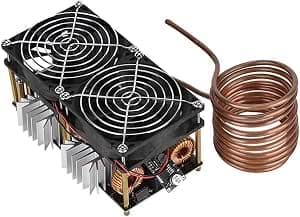
1800W 12V-48V ZVS Low Voltage DC Induction Heater Module PCB Board,Heat Induction Tool for Quenching, Annealing and Other Heat Treatments,DIY High Frequency Flyback Driver Heater
Description
The Induction Heater Module peaks at 1800W, with a military-grade PCB and dual cooling fans for superior heat dissipation. It supports up to 40A current and is versatile for DIY heat treatments and metal melting in graphite crucibles. Recommended for use with a 36V+ power supply for efficient heating. Caution: High power requires adequate cooling and metal handling to prevent overload.
Compare the trade-offs
Similar products, side by side
A random selection of analyzed products from the same category. Different products are not necessarily interchangeable.


One less thing to search
Before you buy: quick questions
What do I need besides the module itself to make it work?
This is a core module, not a complete kit. To operate it, you will absolutely need: 1) A high-current, low-voltage DC power supply (e.g., a 48V 40A+ server PSU, or multiple car batteries in series). 2) Heavy-gauge wiring (e.g., 8 AWG) for power connections. 3) Active cooling, like a 12V fan mounted directly over the heatsink. Many YouTube tutorials cover these essential additions in detail.
Is this suitable for someone new to electronics or induction heating?
We recommend this module for users with intermediate to advanced DIY electronics experience. It arrives as a bare PCB with minimal instructions. Success requires knowledge of high-current wiring, coil design, and thermal management. Beginners often find the learning curve steep and may be better served by a more integrated, beginner-friendly kit.
My module stopped working or a component burned. What happened?
The most common cause of failure is pushing the module to its maximum 1800W rating without adequate cooling or an under-sized power supply, which stresses components like the IGBTs. For reliable operation, we advise using it at 70-80% of its max rating with strong forced-air cooling. As noted in many forum discussions, these are powerful DIY components that require careful setup for longevity.
Can you provide a wiring diagram or instructions for the coil?
While comprehensive printed instructions are not included, a wealth of community-generated resources exists. Searching for "ZVS induction heater guide" on platforms like YouTube or electronics forums will yield excellent tutorials on wiring, coil winding techniques (typically 5-10 turns of thick copper tubing), and crucial safety tips shared by experienced users.
What is this module best used for, and what are its limitations?
It excels at fast, localized heating for small to medium DIY projects like annealing knife blades, hardening tools (quenching), melting small amounts of metal, or heat-treating jewelry. Its main limitation is that it's not an industrial, continuous-duty tool. For best results and durability, use it in short, controlled bursts with ample cooling between cycles, as many satisfied hobbyists on social media recommend.
From a similar, more-reviewed product in this category: Windmill Space Heater for Indoor Use, Portable Electric Heater
Will this actually heat my bedroom, or is it more of a desk heater?
It's best understood as a personal-space heater. The Ceramic+ Precision Heating and 70° oscillation warm the area around you quickly and evenly — great for bedrooms, home offices, and nurseries — but it's not designed to replace central heating for a large open-plan room. Many Reddit users put it plainly: "perfect beside my desk, not for my whole living room." If you want whole-room warmth, size up; if you want fast, targeted comfort, this is the sweet spot.
How quiet is it really — could I run it in a nursery overnight?
On Low, yes. The Dual-Ring Brushless DC Motor runs as low as 20 dB, which reviewers consistently describe as "whisper-quiet — I forgot it was on." High mode is audibly louder (normal for any forced-air heater), and a few users mention a faint oscillation click. Combined with the auto-dimming display and 0–12 hour timer, it's a genuinely sleep-friendly setup for nurseries and light sleepers.
What's the deal with the SafeFuse plug — is it a real safety feature or just marketing?
It's a real feature, not a gimmick. The SafeFuse Power Plug actively monitors heat levels and cuts power if something's off, and it sits alongside overheat protection, tip-over protection, V0 flame-retardant internals, and a Child Lock. One note from forum chatter: the plug can feel warm to the touch during high-wattage use — that's normal — but if it ever feels hot or trips repeatedly, contact Windmill support. Parents and pet owners consistently cite this safety stack as their reason for buying.
Do I need batteries for the remote, and what if it arrives damaged or I change my mind?
Yes — the remote requires batteries, which aren't included (a common gripe in reviews: "for this price, throw in the batteries, Windmill"). The good news is you don't strictly need it: the top-panel controls and programmable timer work fine on their own. If anything arrives damaged or you change your mind, purchases are covered by the standard retailer return window — check the listing's return policy at checkout, and reach out to Windmill support directly for after-sales issues, which reviewers generally describe as responsive.
Why is there no app or smart-home control — and is this the right heater for me?
The "no app" design is deliberate: no account, no Wi-Fi dropouts, no surprises — just remote and panel controls, a memory function, and Eco Mode with automatic temperature control. Smart-home enthusiasts on Reddit occasionally push back ("my $30 fan has Wi-Fi"), but privacy-minded and simplicity-first buyers love it. It's the right fit if you want quiet, safe, app-free personal warmth for a bedroom, office, or nursery; if you need Alexa integration or whole-room output, a larger smart tower heater is a better match.
Answers are limited to the manufacturer's listing and the reviews we analysed. Questions those sources cannot support are not answered here.
Transparent by design