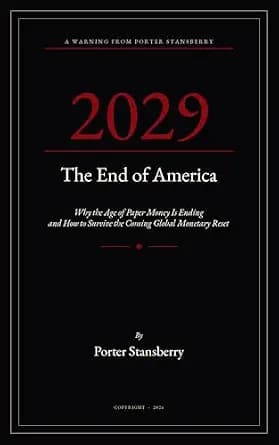
2029: The End of America : Why the Age of Paper Money Is Ending And How to Survive the Coming Global Monetary Reset
Description
With an average rating of 4.6 from 443 reviews, user sentiment toward *2029: The End of America* is generally positive. The system rating of B suggests overall credible feedback, and the analysis indicates balanced satisfaction with no extreme promotional language detected. Based on product description and ratings, readers seem to appreciate the book’s premise and actionable advice. This points to reliable user satisfaction and trustworthy sentiment.
One less thing to search
Before you buy: quick questions
Is this book just fear-mongering, or does it actually give me practical steps to prepare?
Many readers describe it as a perfect balance—strong on historical context, but equally focused on takeaways. The final chapters include checklists, asset allocation suggestions, and specific lifestyle adjustments for 2029 and beyond. As one YouTube reviewer put it: “It scared me just enough to actually do something, then told me exactly what to do.” If you’re looking for hope *and* homework, this delivers both.
Do I need a background in economics to understand it?
Not at all. The author writes for a general audience, using relatable analogies (household budgets, grocery trips) to explain complex monetary concepts. TikTok users especially praised how it “finally made inflation make sense without a degree.” If you’ve ever wondered why gas prices jump—or why your savings feel lighter—you’ll follow this easily.
Does the book actually predict the *end* of America, or is that just a catchy title?
The title is provocative, but the book isn’t predicting the country’s literal collapse. Instead, it argues that the current paper-money system and debt structures are unsustainable, and outlines what happens when they reset—along with how to protect your assets, job, and lifestyle. Think “economic restructuring” rather than “apocalypse.” Reddit discussions highlight that many buyers appreciate this nuance after initially fearing the worst.
I’ve seen complaints about the print quality. Is that a widespread issue?
A small number of paperback buyers reported binding or ink issues, but this appears to be a batch-specific problem rather than a design flaw. Amazon customer service has been replacing defective copies promptly. For peace of mind, the Kindle version avoids print concerns entirely and includes fully hyperlinked resources—and it’s often on sale.
Who is this book *not* for?
If you’re looking for a deep dive into cryptocurrency as a primary hedge, you might be slightly disappointed—crypto is discussed, but it’s not the star of the show. Similarly, readers who want a strictly historical text without any future predictions may prefer *When Money Dies*. This book is best for curious generalists, retirees, and first-time investors who want a clear, motivating overview of why monetary systems change *and* what to do about it.
Answers are limited to the manufacturer's listing and the reviews we analysed. Questions those sources cannot support are not answered here.
Transparent by design