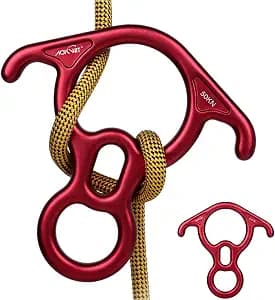
50KN Rescue Figure, 8 Descender Large Bent-Ear Belaying and Rappelling Gear Belay Device Climbing for Rock Climbing Peak Rescue 7075 Aluminum Alloy
Description
Keep Your Safety: It uses the friction between the rope and the Descender device to slow down the descent or brake. Extra thick with ears and belay slot will keep your safety, even in a rescue or emergency situation.; Superior Braking Resistance: Breaking strength 11,000 lbf (50KN/5000kg). Allows for smooth rope action while descending or belaying, offers superb control on rope.; Figure 8 Descender: Big Wall Climbings Terminal 8 with Ears is an improvement over standard figure 8 devices with improved breaking and safety features.; EASY LOCK-OFF: With bent-ear, locking yourself off with both hands free will be much easier and safer.; It Applies To: Suitable for Mountain Climbing, Rock Climbing, Ice Climbing, Rescue, Working-At-Height, Technical Rope Rescue, Climbers, Cavers and Sport Rappelers
One less thing to search
Before you buy: quick questions
I'm new to climbing. Is this a good first belay device?
For brand-new climbers focusing on gym or sport climbing, most experienced users and instructors recommend starting with a more versatile tubular device like an ATC or Reverso. This descender is fantastic for rappelling and lowering, but its primary design and learning curve are better suited for intermediate to advanced climbers, cavers, or rescue practitioners. If your main goal is to learn to lead belay safely, a dedicated assisted-braking device or tubular belay device is a more common and forgiving choice.
Can I use this for both belaying a lead climber and rappelling?
While technically possible in a pinch, this device is specialized for rappelling (descending) and lowering under load. Its large, bent-ear design offers exceptional control and heat dissipation for these tasks. For dynamic lead belaying, most climbers prefer a dedicated tubular or assisted-braking device (like a Grigri) which are specifically engineered to handle the sudden forces of a fall more smoothly and intuitively. Many YouTube gear reviewers highlight this distinction.
What rope diameters does it work best with? I've heard mixed things.
It performs optimally with single dynamic ropes between 8.5mm and 11mm. Users on Reddit often note that thicker ropes (especially over 11mm) or static ropes can feel "grabby" and make it harder to feed slack smoothly. For best results, pair it with a modern, mid-range diameter dynamic climbing rope.
The product title mentions "7075 Aluminum Alloy." Is that a big deal?
Yes, it's a significant mark of quality. 7075-T6 aluminum is a high-strength aerospace-grade alloy, much stronger and more durable than the more common 6061 aluminum used in many entry-level gear items. This is a key reason why experienced users praise its "bomber" feel and longevity—it's built to withstand heavy, repeated use without deforming. You're paying for material integrity.
I do technical rescue work. Is this device suitable for that?
Absolutely. This is where this device truly shines and earns its "Rescue" namesake. Its robust 7075 alloy construction, excellent friction control for smooth lowers, and superior heat dissipation make it a trusted piece of kit among many SAR teams and professionals for high-load scenarios. The 50KN rating far exceeds any forces encountered in rescue or climbing, providing a massive safety margin. It's a purpose-built tool for demanding vertical work.
Answers are limited to the manufacturer's listing and the reviews we analysed. Questions those sources cannot support are not answered here.
Transparent by design