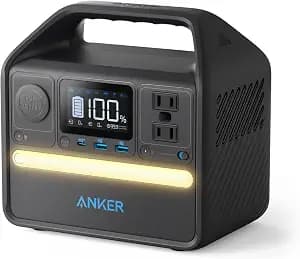
Anker 521 Portable Power Station Upgraded with LiFePO4 Battery, 256Wh 6-Port PowerHouse, 300W (Peak 600W) Solar Generator (Solar Panel Optional), 2 AC Outlets, 60W USB-C PD Output, Outdoor Generator
Description
Robust High-Wattage Support: SurgePower technology ensures a robust output up to 600W, capable of powering high-demand appliances with ease during outdoor activities or unexpected power outages.; Decade-Long Performance: InfiniPower technology guarantees a lifespan of up to 10 years with LiFePO4 batteries, advanced temperature control, and a durable construction for long-lasting power storage.; Multi-Device Charging Hub: Equipped with 6 diverse ports, including 2 AC, 2 USB-A, 1 USB-C, and 1 car outlet, it caters to a wide range of charging requirements for electronics on the move.; Streamlined Fast Charging: The built-in USB-C port offers a fast-charging solution, allowing for swift recharging of laptops and other compatible devices, streamlining the charging experience.; Extended Energy Reserve: Boasting a 256Wh capacity, the battery provides substantial power for extended getaways, keeping your devices fully charged and operational throughout your adventures.; What You Get: Anker 521 Portable Power Station (PowerHouse 256Wh), DC adapter, car charging cable, welcome guide, our worry-free 5-year warranty, and friendly customer service.
Compare the trade-offs
Similar products, side by side
A random selection of analyzed products from the same category. Different products are not necessarily interchangeable.

DaranEner Portable Power Station, 192Wh LiFePO4 Battery Backup Solar Generator with w/2 300W (Peak 600W) AC Outlets, USB-C PD 60W Fast Charge, Power Bank for Camping, Outdoor, Home,Emergency

MARBERO Portable Power Station 88Wh Camping Lithium Battery Solar Generator Fast Charging with AC Outlet 120W Peak Power Bank(Solar Panel Optional) for Home Backup Outdoor Emergency RV Van Hunting
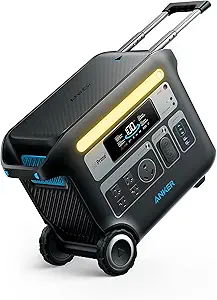
Anker SOLIX F2000 Portable Power Station, PowerHouse 767, 2400W Solar Generator, GaNPrime Battery Generators for Home Use, LiFePO4 Power Station for Outdoor Camping, and RVs (Solar Panel Optional)
One less thing to search
Before you buy: quick questions
Can this power a mini-fridge or CPAP machine, and for how long?
Yes, it can power many mini-fridges and most CPAP machines (without a heated humidifier). However, runtime is a key consideration. The 256Wh capacity typically provides about 4-6 hours for a standard mini-fridge and 1-2 nights for a CPAP, depending on the model and settings. For longer, multi-day power needs for medical devices or coolers, a higher-capacity power station (500Wh+) would be a better fit.
Is the solar panel worth it, and how long does a full solar recharge take?
The optional solar panel is convenient and guaranteed compatible, but it's an additional investment. A common observation from outdoor users is that solar recharging is highly dependent on perfect sunlight. With the recommended 100W panel, a full recharge can take 6-8 hours of direct, unobstructed sun. For frequent off-grid use, many reviewers suggest considering a higher-wattage third-party panel to reduce charge time.
I've heard the fan can be loud. Is this a major issue?
The internal cooling fan activates under heavy AC load (typically over 200W) and can be noticeable in very quiet environments. It's a trade-off for the compact design. Users running devices like coffee makers or power tools mention the sound, while those charging phones and laptops rarely hear it. For quiet camping, it's best to use high-draw devices intermittently.
What's the real benefit of the LiFePO4 battery, and how is it covered by warranty?
The LiFePO4 (Lithium Iron Phosphate) battery is a major upgrade in longevity and safety. It can withstand over 3,000 charge cycles before degrading to 80% capacity, far outlasting standard lithium-ion batteries. Anker's 5-year warranty provides strong coverage for this durable technology, though it's important to note that normal battery degradation over time is not considered a defect.
Who is this power station best suited for, and who might want to look at alternatives?
The Anker 521 is perfect for car camping, tailgating, powering a mobile office, or as a reliable home backup for short outages (keeping your internet and devices on). If your primary needs are extended off-grid solar power, running high-wattage appliances for hours, or requiring "pass-through charging" (using the station while it's plugged in), you might prefer alternatives with higher capacity, faster solar input, or that specific feature.
From a similar, more-reviewed product in this category: Jackery Explorer 300 Portable Power Station,292Wh
What can the Explorer 300 actually power — and what can't it?
It's built for devices drawing under 300W total: laptops, phones, drones, cameras, fans, lights, a CPAP, and similar electronics. It will *not* run high-draw appliances like coffee makers, toasters, hair dryers, or full-size fridges — those need a larger unit such as the Explorer 1000 v2. A quick tip many reviewers share: check your device's wattage label before buying, and remember the 600W peak only covers brief startup surges, not continuous draw.
How long will it run my device on a single charge?
Use the formula **working time ≈ 292Wh × 0.85 ÷ your device's wattage**. A 60W laptop lasts roughly 4 hours; a 10W phone charge goes for many cycles. Keep in mind real-world runtime varies with temperature and device efficiency — several YouTube testers note heating devices drain it far faster than the math suggests, so plan conservatively for anything that generates heat.
Do I need to buy a solar panel separately, and how fast does it recharge?
Yes — the solar panel is **not included**. Via the 100W USB-C port (wall charger), it fully recharges in about 3 hours; a car port takes around 4 hours. For solar, a 100W Jackery panel reaches 80% in roughly 2.8 hours, while the compact 40W panel takes about 7.5 hours to hit 80%. Many campers recommend springing for the 100W panel upfront rather than the 40W, since the smaller one is best suited to topping up rather than full recharges.
Is it really portable enough for hiking and camping?
At 7.5 lbs with an integrated top handle, it's about 17% lighter than the industry average for its capacity and easy to carry one-handed from car to campsite. That said, TikTok and Reddit users are candid: it's "portable" for car camping, overlanding, and short carries — not for multi-mile backcountry backpacking. If ultralight trekking is your goal, pair it with a small folding panel and treat it as basecamp power rather than pack weight.
How durable is it, and what if something goes wrong after purchase?
The LiFePO4 battery is rated for 4,000+ charge cycles before dropping to 70% capacity — roughly 11+ years of regular use — which is a major step up from older lithium-ion models and a point buyers consistently praise. It operates from 5°F to 113°F. If you receive a defective unit (a small number of buyers report DOA outlets or fan noise), contact Jackery support for warranty service; most report polite resolution, though RMA turnaround can take a couple of weeks. Note that orders require a physical delivery address — PO Boxes aren't accepted — so double-check your shipping details at checkout.
Answers are limited to the manufacturer's listing and the reviews we analysed. Questions those sources cannot support are not answered here.
Transparent by design