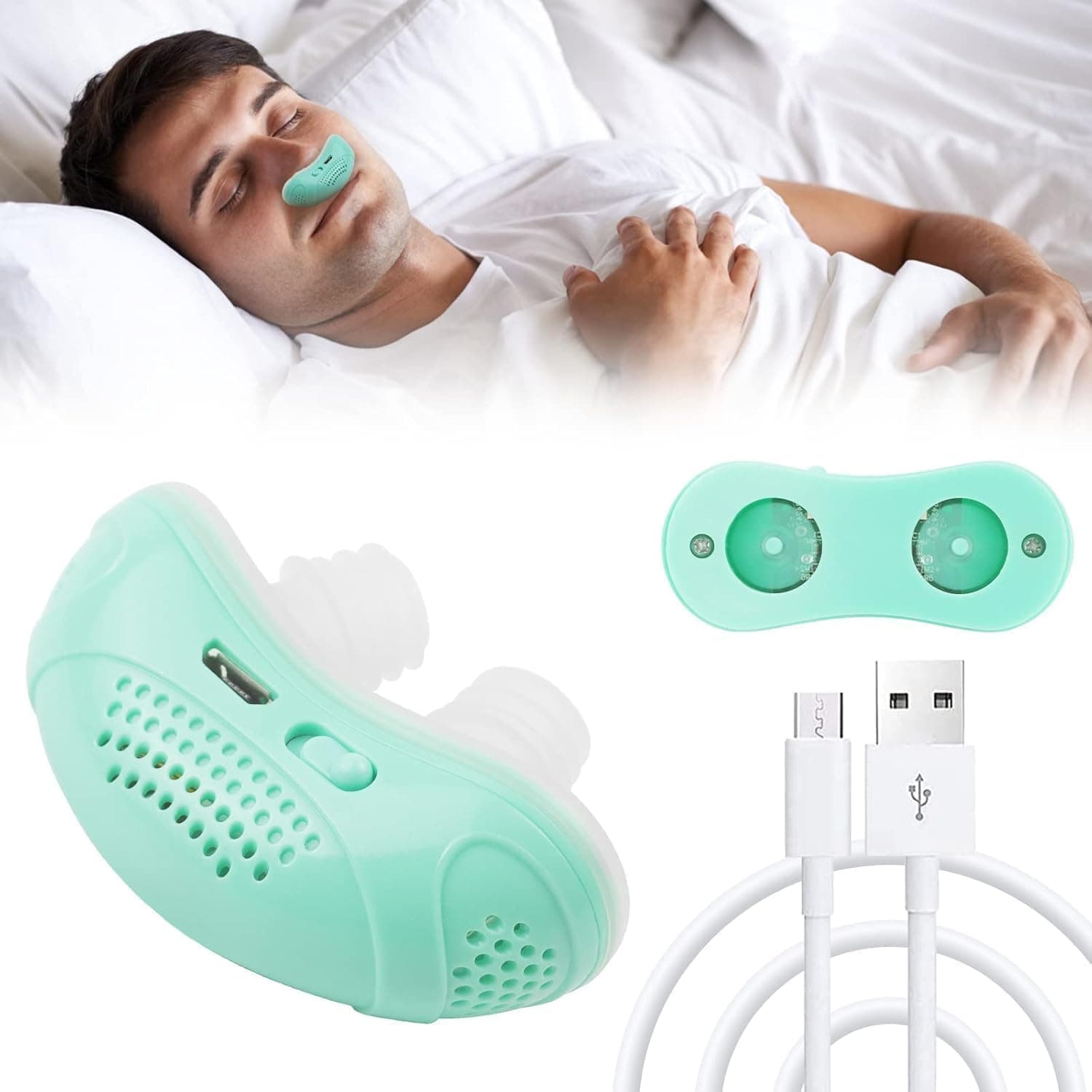
Anti Snoring Devices, Effective Snoring Prevention, Twin Turbine Electric Adjustable and Breathabl, Snoring Solution for Men and Women, Suitable for All Nose Shapes, anti-snoring devices Green
Description
Say goodbye to snoring with this anti-snoring device! Designed for comfort, it features soft medical-grade silicone, dual vortex airflow technology for clear breathing, and a lightweight, pressure-free fit. Easy to use and highly effective, it improves sleep quality naturally.
One less thing to search
Before you buy: quick questions
Will this anti-snoring device fit my nose, and is it comfortable enough for all-night wear?
The twin-turbine design is adjustable and made from soft medical-grade silicone, so it aims to suit most nose shapes. That said, many TikTok and Reddit users note that "one size fits all" rarely means perfect—some find it snug, others too loose. If you have very narrow or very wide nostrils, check the seller's sizing guide or return policy before committing. For most side sleepers, the lightweight build feels pressure-free once positioned correctly.
Does it actually stop snoring, or is the "twin turbine" claim just marketing?
It's a mechanical nasal dilator, not a cure for sleep apnea. Users with mild snoring or congestion often report quieter nights, but those with moderate-to-severe apnea frequently say it didn't solve the problem. Think of it as a low-risk first step—if your snoring is loud and persistent, a doctor or a mandibular advancement device may serve you better.
How durable is the adjustable mechanism, and how do I clean it?
Build quality varies. Some buyers report the dial or turbines loosening after a few weeks, while others get months of use with gentle handling. Rinse the silicone parts with warm water and mild soap after each use, and use a soft brush to clear dust from the turbine vents. Avoid boiling or harsh chemicals, which can warp the plastic and degrade the silicone.
What if it doesn't work for me—can I return it, and how is shipping?
Return windows depend on the seller, so read the listing carefully before buying. Many users complain that refunds take multiple emails and that return shipping isn't free. Shipping speed is typically standard for small e-commerce items, but delays happen. If you're on the fence, choose a seller with a clear 30-day money-back guarantee and tracked delivery.
Who is this best suited for, and are there better alternatives?
It's best for light snorers, people with nasal congestion, and partners who want an affordable first try. It's not ideal for severe sleep apnea, very sensitive skin, or anyone expecting clinical-grade results. Alternatives worth considering include nasal strips, tongue-retaining devices, custom mouthguards, or CPAP for diagnosed apnea. As one YouTube reviewer put it: "Try the cheap stuff first, but don't expect a miracle."
Answers are limited to the manufacturer's listing and the reviews we analysed. Questions those sources cannot support are not answered here.
Transparent by design