What people like
Birds readily eat the seed
Several reviewers report birds eating the sunflower hearts from feeders or the ground, and some note it attracts birds without shell mess.
Our buying verdict
Several reviewers report birds enjoying the seed, but one received old, damaged packaging.
Buyers who want sunflower hearts that birds will eat from feeders or the ground and who do not mind shell-free seed.
Buyers who need assurance of fresh, intact packaging on arrival, given one report of old, spilled seed.
The 30-second read
What people like
Several reviewers report birds eating the sunflower hearts from feeders or the ground, and some note it attracts birds without shell mess.
The main watch-out
One reviewer received an order that looked old, had been taped repeatedly, and had seed loose in the box.
Before you choose
One reviewer found the price good but returned to a feed store where they get a discount, so compare cost before buying.
From a similar, more-reviewed product in this category: Audubon Park Extreme Variety Wild Bird Seed, 10 lb.
What people like
Several reviewers report that birds come to and eat this seed mix, with some noting a variety of bird species visiting.
The main watch-out
One reviewer found the mix was mostly sunflower seeds rather than the advertised extreme variety, and disliked the mess they leave.
Before you choose
One reviewer noted that squirrels also loved the seed, so buyers may want to consider whether that is acceptable.
Description
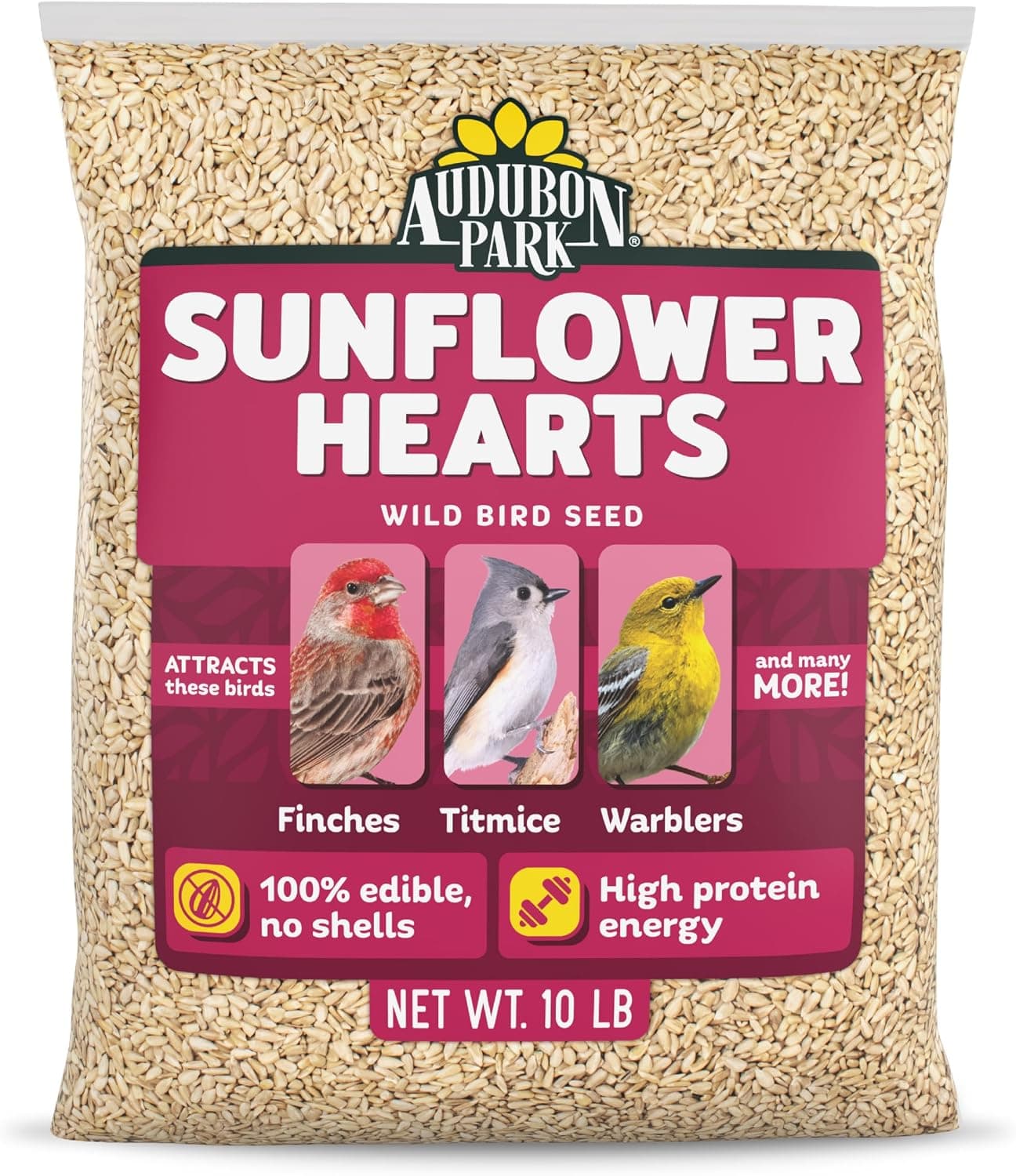
Attract more beautiful birds to your backyard with Audubon Park Sunflower Hearts Wild Bird Food. Made with 100% sunflower hearts and no shells, this premium bird food delivers more delicious food for birds to enjoy while helping reduce the mess and discarded shells around your feeders. Sunflower hearts are a favorite among many wild birds, making this an easy choice for creating a lively backyard feeding station. Simply fill your tube, hopper, or platform bird feeder and enjoy watching your feathered visitors flock to the feeder. With Audubon Park Sunflower Hearts, you can offer birds a delicious, convenient food while keeping your yard cleaner.
Compare the trade-offs
A random selection of analyzed products from the same category. Different products are not necessarily interchangeable.
Check the evidence
Included does not mean verified authentic. Flagged does not mean proven fake. These are analytical classifications.
Showing 3 illustrative excerpts, not the complete review set.
Amazon waste.
“I have no issues with the bird seed. I do, however, have an issue with the way Amazon has been packing things. This is it a box big enough for a giant garbage can. Very very wasteful and unnecessary. I've had other things arrived with just the sticker on them.”
Signals matched: Specific detail: comparison · Reads as an authentic voice
Disappointed in quality
“I have ordered from this company before. The order that I received today was old had been taped up several times seed was all out in the box and it looked like it was very old.”
Signals matched: Specific detail: process · Reads as an authentic voice
Great price but I get a discount at the feed store
“Great price but I get a discount at the feed store so went back to purchasing from them”
Signals matched: Specific detail: comparison · Reads as an authentic voice
One less thing to search
It depends on your feeder traffic, but most backyard setups go through a 10 lb bag in roughly two to four weeks during peak season. Because these are shell-free hearts, nearly all of it gets eaten rather than kicked to the ground—so while the upfront price may look higher than mixed seed, many users find there's far less waste. Several reviewers note it's an especially good buy when it's on sale.
Yes—it's designed for tube, hopper, and platform feeders, and the no-shell formula is the headline benefit. Birds eat the kernel instead of cracking and discarding hulls, so you won't get the usual carpet of shells under your feeder. Just keep in mind that shell-free seed can clump if it gets wet, so a feeder with good drainage or a baffle overhead helps.
Sunflower hearts are rich and appealing, so squirrels and raccoons will take notice—this is one of the most common caveats in user discussions. The seed itself isn't the problem so much as the lack of a barrier. Pairing it with a squirrel baffle or a weight-activated feeder makes a big difference, and many longtime users say that combo is what keeps the seed going to the birds.
It's pure sunflower kernels—no shells, no filler, no added flavoring—and it's suitable for all life stages of wild birds. It's a high-energy food that finches, chickadees, nuthatches, sparrows, and juncos tend to favor. As with any seed, store it in an airtight container in a cool, dry spot so it stays fresh and doesn't cake.
If your bag shows up torn, caked, or otherwise not as described, contact the retailer's customer service for a replacement or refund—most buyers report smooth resolutions for damaged or off-quality bags. To reduce the risk of clumping after opening, transfer the seed to a sealed container and keep it out of humidity. A little proactive storage goes a long way toward keeping every bag fresh to the last scoop.
From a similar, more-reviewed product in this category: Audubon Park Extreme Variety Wild Bird Seed, 10 lb.
It works in tube, hopper, and platform feeders, but the peanuts and raisins are chunky — many users report the smoothest experience in hopper or platform feeders with larger openings. If you're using a small-port tube feeder, fill it partially at first and watch for jams. A quick tip from experienced reviewers: shake the feeder occasionally so smaller seeds don't settle and block the ports.
Yes — and it's one of the most common things buyers mention. Picky eaters like finches and juncos often flick out larger pieces to get to the sunflower seed, while cardinals, nuthatches, and titmice happily eat the nuts and fruit. If ground mess bothers you, a tray or platform feeder with a catch basin helps, and the dropped seed often gets cleaned up by ground-feeding birds like juncos and doves.
Black-oil sunflower is the classic crowd-pleaser and creates less rejected seed, but it attracts a narrower range of species. This blend's raisins, peanuts, and safflower broaden the guest list — users consistently report cardinals, titmice, nuthatches, and finches showing up together. If your priority is maximum species variety, this is the pick; if you want minimal mess and maximum simplicity, straight sunflower is the safer bet.
Like most seed mixes with fruit and nuts, it's sensitive to moisture. In open platform feeders during rainy stretches, users report clumping within about a week. Keep it in a covered hopper feeder or bring platform feeders in during storms, store the bag sealed and dry, and only fill what birds will finish in a few days. Many reviewers say a covered feeder completely solves the issue.
At 4.7 stars across nearly 2,000 reviews, most buyers call it strong value for a premium blend — but bird preferences vary by region, and a few users found their local birds snubbed the raisins at first. Birds often need a week or two to discover a new food source, so give it time before judging. If it truly doesn't work out, check the retailer's return window; many buyers suggest starting with one bag to test acceptance before stocking up.
Answers are limited to the manufacturer's listing and the reviews we analysed. Questions those sources cannot support are not answered here.
Transparent by design
