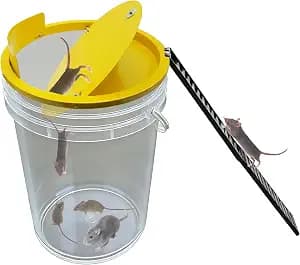
Bucket Lid Mouse Trap Metal 5 Gallon lid,Strong Metal Material that Cannot be Bitten, auto Reset, Repeat Catch, Indoor Outdoor, Reusable 5 Gallon Bucket Lid, (1Pack) (Yellow)
Description
Rid your home of pesky rodents with the Mice Mouse Rat Trap Bucket .
One less thing to search
Before you buy: quick questions
Will this lid fit my standard 5-gallon bucket?
It's designed for most standard 5-gallon buckets, but we've seen that rim thickness varies between brands. For the best seal, try it on your bucket before adding water or bait. Many DIY users on Reddit recommend testing it dry first—it takes 30 seconds and saves frustration.
How durable is the metal material, and does it rust outdoors?
The metal is strong enough to withstand gnawing by mice and small rats—no bite-through complaints so far. However, if you're using it outside in rain or humidity, the metal parts may develop surface rust over a few months. A light spray of outdoor lubricant or storing the trap in a sheltered spot extends its life significantly.
How does the auto-reset feature work for repeat catches?
When a mouse falls into the bucket, the metal flap swings back into place automatically. You can catch multiple mice in a single night without resetting. Just note that if you have larger rodents like full-grown rats, the metal might bend and block the mechanism. For regular house mice, it's reliable—even TikTok users show 5+ catches in one bucket.
What's the best way to clean the trap after several uses?
Empty the bucket daily if you're catching multiple mice, then rinse with a hose or wipe down with disinfectant. The plastic lid is dishwasher-safe, but hand wash the metal parts to prevent rust. A tip from experienced users: add a thin layer of vegetable oil to the bucket walls—mice slide in faster, and clean-up is easier.
Is this a good value compared to plastic traps or electric models?
For the price, most buyers find it a strong value—it's reusable indefinitely, holds up better than plastic snap traps, and doesn't use electricity or batteries. The trade-off is maintenance: plastic traps are quieter and won't rust, while electric traps kill instantly. If you have a serious, ongoing mouse problem and don't mind a little upkeep, this lid outperforms disposable traps in the long run. If you want zero maintenance, consider a fully plastic bucket lid instead.
Answers are limited to the manufacturer's listing and the reviews we analysed. Questions those sources cannot support are not answered here.
Transparent by design