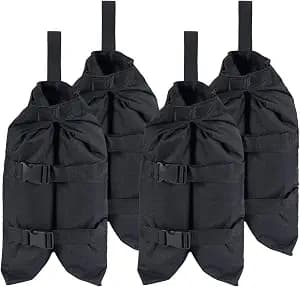
Canopy Weights Bag(192lbs) Set of 4, 1680D Heavy Duty Pop Up Tent Weights Sand Bags for Instant Outdoor Sun Shelter Canopy Patio Umbrella
Description
Set of 4 Weight Bags: Each pack can hold up to a maximum of 45 lbs (20.5kg) of weight in sand, rock, dirt and other contents, premium weight bag for any canopy or tent.(No including sand); Sturdy & Waterproof: Waterproof 1680D polyester fabric coating with PVC, 300% stronger than most bag on US market.; Scientific Design: There are two hook and loop strap that is attached to each weight bag as it wraps around the leg to your canopy, thus allowing it to withstand high wind and other weather elements.; Reduce Unnecessary Trouble: Use Velcro seals instead of zippers, you will not worry the zipper broken. And each bag seam is stitched for durability. A rugged nylon straps with hand carry handle on top for easy transport.; Widely Usage: The weight bags are a must have for camping, tailgating, picnics, festivals, outdoor markets, parties, barbecues, sports events, the beach, and anywhere else you’d need a canopy or tent.
One less thing to search
Before you buy: quick questions
Do the bags come pre-filled to reach the 192lb total weight?
No, they arrive empty. The "192lbs (Set of 4)" refers to their total *capacity*. Each empty bag weighs just a few pounds. You fill them with sand, gravel, or dirt on-site to achieve the necessary weight. Many users on social media emphasize this point to set correct expectations—you provide the filler material, which gives you flexibility but requires a bit of initial effort.
How well do they actually hold a canopy in windy conditions?
Extremely well. This is the most praised feature in reviews. Users consistently report these weights successfully securing 10x10 and larger pop-up canopies in strong gusts where standard stakes failed. The key is proper filling; a fully loaded 48lb bag per leg provides significant downward force to prevent lifting and tipping.
What's the best way to fill them, and how durable are the bags long-term?
We recommend using dry sand for optimal weight and ease. A small shovel or funnel makes the process easier. The bags are constructed from rugged 1680D fabric with reinforced stitching at stress points. While the vast majority of users report seasons of trouble-free use, a small number have noted that zippers or straps can be points of wear over many years with intense UV exposure. For best longevity, store them out of direct sunlight when not in use.
Are these suitable for someone who sets up a canopy at a weekly farmer's market?
They are effective but may not be the most convenient for highly frequent, mobile use. While they offer unbeatable stability, the process of filling, transporting heavy bags, and storing them can be cumbersome weekly. For daily/weekly vendors, dedicated weighted footplates or heavy-duty spiral stakes might offer a faster setup/teardown, though they can be more expensive or less effective in very high winds on hard surfaces.
What is your return policy if they don't fit my canopy legs or meet my needs?
We offer a standard return window for unused and unopened items. Please check your order details for the specific return period and instructions. Since these require filling with external material to function, we cannot accept returns on used or filled bags. We encourage measuring your canopy leg diameter against our product dimensions to ensure compatibility before purchase.
Answers are limited to the manufacturer's listing and the reviews we analysed. Questions those sources cannot support are not answered here.
Transparent by design