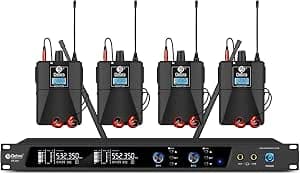
D Debra Audio PRO ER-202 UHF Dual Channel Wireless In-Ear Monitor System with Transmitter and Receiver for Stage, Recording Studio, Musicians, Monitoring (4 Bodypack with Transmitter)
Description
The PRO UHF Wireless In-Ear Monitoring System: The new UHF system from D Debra Audio with PLL phase locked loop. It with high quality IC chips, improves overall performance, anti-frequency reduction, anti-series frequency, has a stronger and more stable signal, better signal-to-noise ratio. The frequency range is 510MHz-580MHz. The preset 100 frequencies for each channel can be switched at will, which can better avoid signal interference.; Suitable for multiple places: built-in limiter circuit to avoid distortion when input levels are too high. There is a 1/4 inch headphone jack on the front. On the back there is a mixed 6.35 input and an independent integrated two-channel interface input. Well suited for stage, broadcasting, recording studio, musicians, band performance.; Feature Design: The transmitter has an LCD display panel, RF and AF display. The receiver is equipped with LCD display, power supply and RF reception indicator. The panel can monitor battery power.; More stable signal, greater effective distance: on an unobstructed open stage, the effective distance can be up to 800 feet. The best range is between 500 and 600 feet. The good signal-to-noise ratio of the dynamic range, the good anti-interference and the perfect original sound reproduction.; Packing list: 1 x transmitter, 4 x pocket transmitter (with headphones), 2 x antenna, 2 x cables, 1 x power adapter, 1 x user manual (English language not guaranteed).
One less thing to search
Before you buy: quick questions
Is this system beginner-friendly, or is there a steep setup learning curve?
While it offers pro-level features, it's not entirely "plug-and-play." Most users, including church techs and band members, find the initial frequency scanning and syncing takes a bit of patience. The manual is technical, but numerous setup tutorials on YouTube for the ER-202 can guide you through it. Once set, it's very stable.
How is the real-world battery life and build quality of the bodypack receivers?
Under typical stage use at a solid volume, expect 5-6 hours from the AA batteries, so having spares for long gigs is wise. The main transmitter is praised for its metal casing and durability. The bodypack receivers are functional but lighter; many users on forums advise handling the retractable antennas with care to ensure longevity.
What's the consensus on the included earbuds and compatibility with other gear?
The included generic earbuds are widely considered a weak point—they're basic and uncomfortable for extended wear. Virtually all serious users invest in better-quality, third-party in-ear monitors. The system itself is highly compatible, using standard 1/4" and XLR outputs to connect to most mixers, interfaces, or headphone amps.
Can this system handle a crowded wireless environment, like a venue with lots of Wi-Fi?
Yes, its UHF technology and adjustable channels are designed for this. The key is properly using the scan function to find the clearest frequency before your gig. Musicians on Reddit note it performs reliably in multi-band shows and churches, though in extremely saturated urban areas, more expensive systems with automatic coordination have an edge.
Who is this system best suited for, and who might want to look elsewhere?
It's a fantastic value for budget-aware gigging musicians, worship teams, and podcasters/home recordists who need reliable wireless monitoring and don't mind a manual setup. If you are an absolute beginner terrified of technical settings or a touring pro needing gear that can survive constant rough handling, you might consider simpler entry-level models or invest in a higher-tier used system from brands like Shure.
Answers are limited to the manufacturer's listing and the reviews we analysed. Questions those sources cannot support are not answered here.
Transparent by design