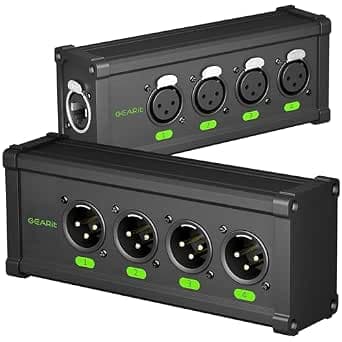
GearIT 4 Channel Multi Network 3-Pin XLR/DMX/AES-EBU to Ethercon RJ45 Cat5/Cat6 Ethernet Extender for Live Stage, Sound, Lighting, Or Audio Recording Studio (1 Pair: 4 XLR Male + 4 XLR Female)
Description
4-Channel XLR to Ethernet Adapters — Connect these two extender boxes with an Ethernet cable up to 300 ft. (sold separately) to carry up to 4 channels of XLR audio or 3-pin DMX control signals across stages, studios, DJ venues and live events over a single connection.; EtherCON-Compatible RJ45 Connectors — Lock the Ethernet connection in place during busy concerts and live events with EtherCON-compatible RJ45 connectors on each adapter box. Run an EtherCON-compatible Ethernet cable between the boxes up to 300 feet, and you can trust the boxes won’t get detached when it matters most.; 4 Channels of Analog Audio, One Cable — Used together, these two adapters carry 4 analog XLR audio signals over one RJ45 network cable. Connect audio from mixers, microphones and instruments to the XLR ports, and run all 4 signals to the other adapter via shielded, balanced Ethernet cable (sold separately).; 4 Separate DMX Control Signals — Control LED stage lights, DJ lights, fog machines and effects with up to 4 DMX signals over 3-pin XLR connectors. These adapters allow you to use up to 4 different lighting controllers to control separate lights, while minimizing long cable runs from the control room.; Carries Phantom Power for Mics and DI Boxes — Connect stereo DI boxes, groups of condenser mics and more over a single Ethernet cable to your preamps. These two adapters safely carry 48V phantom power over a compatible RJ45 network cable, so you can use phantom-powered studio or stage gear.
One less thing to search
Before you buy: quick questions
How does this extender compare to buying a traditional analog snake?
Great question—this is a common point of debate. The GearIT extender is much lighter, cheaper, and more flexible than a traditional 4-channel XLR snake. You can run standard Cat5e or Cat6 cable up to 300 feet without signal degradation. However, if you need bombproof connectors for daily touring, many Reddit users note that a traditional snake with Neutrik ends may feel more solid. For most gigging musicians, small venues, and studios, this is a smart, cost-saving solution. ### Q2: Can I use this with DMX lighting fixtures, or is it audio-only? A2: Absolutely—this is one of the product's most praised features. It fully supports DMX512 lighting signals, analog audio (microphones and line-level), and AES/EBU digital audio through the same 3-pin XLR channels. Many TikTok users show setups with a mix of audio and lighting signals running over a single Cat6 cable. Just note that it's not designed for PoE (Power over Ethernet)—signals only. ### Q3: Are the female XLR connectors tight enough, or will cables fall out during a show? A3: This is a valid concern raised in several reviews. The female connectors hold cables securely for normal use, but they don't have the same "locked-in" feel as premium Neutrik jacks. A few stage techs recommend using a small cable tie or Velcro strap as a backup if you're dancing or moving gear vigorously. For installed or semi-permanent setups, they work without issue. ### Q4: What’s the maximum cable distance I can achieve between the two units? A4: Real-world performance is excellent—users consistently report clean signal transmission up to 150 feet (45 meters) with standard Cat6, and many have successfully pushed it to 300 feet (90 meters) for DMX lighting or line-level audio. For best results, use shielded Cat6 cable in high-RFI environments. Digital audio (AES/EBU) may have shorter reliable limits; most users recommend staying under 200 feet for digital signals. ### Q5: Do the channels need to be labeled, or is there some indicator for which is which? A5: The units come without printed channel numbers, which several buyers found surprising. The solution from the community is simple: use a fine-tip paint pen or white label tape to mark 1–4 on both the male and female boxes before your first gig. This saves frustration during dark stage changes. GearIT support has acknowledged this feedback, but no design update has been confirmed yet.
Answers are limited to the manufacturer's listing and the reviews we analysed. Questions those sources cannot support are not answered here.
Transparent by design