What people like
Structured lessons build fretboard confidence
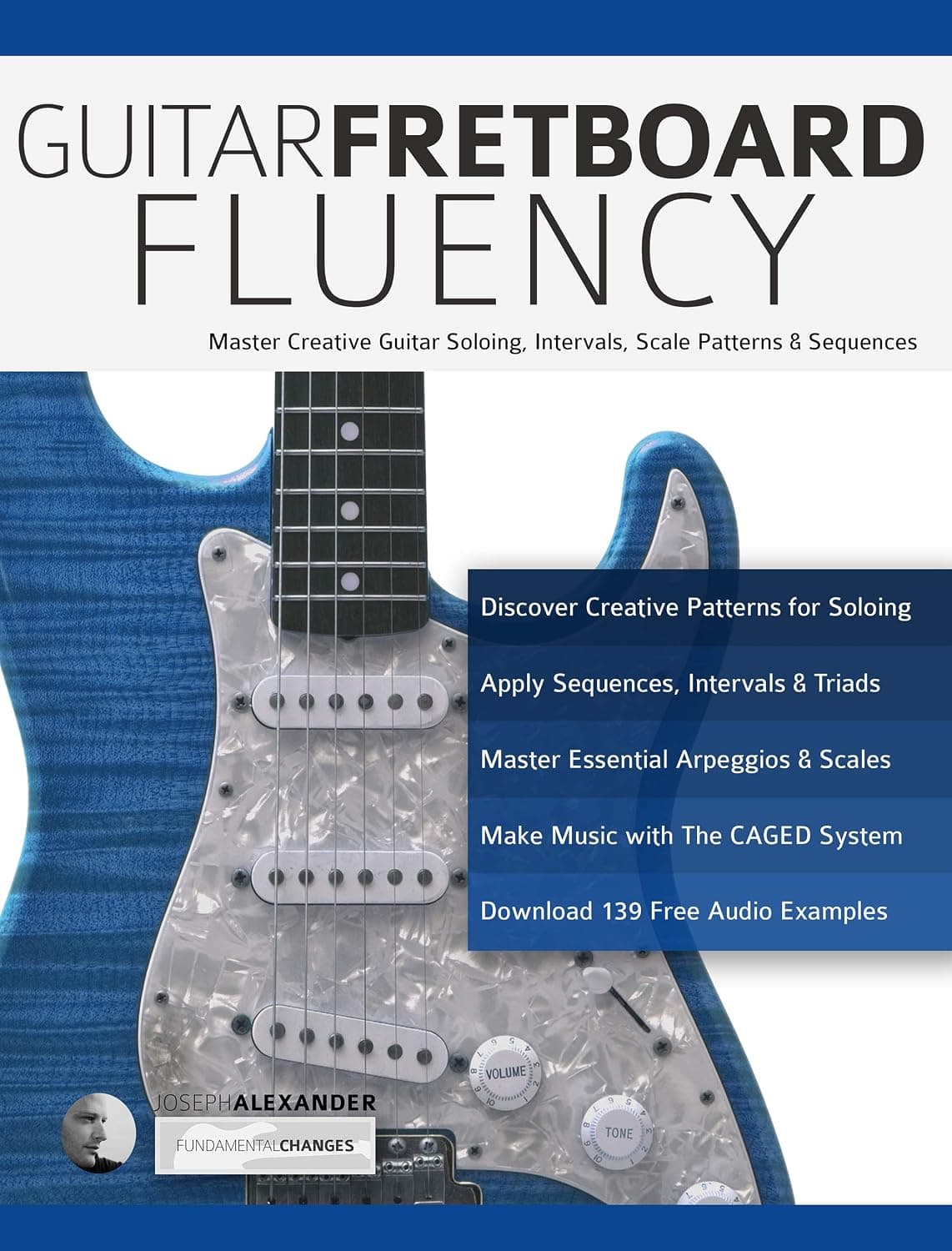
Reviewers praise layered, well-organized lessons and exercises that build fretboard knowledge and soloing confidence.
The 30-second read
What people like
Reviewers praise layered, well-organized lessons and exercises that build fretboard knowledge and soloing confidence.
The main watch-out
One reader found numbering and duplicate scale patterns misprinted; another says the weekly tempo schedule is ambitious and needed slowing.
Before you choose
Several reviewers note the book is most useful for players with some prior fretboard knowledge and who can commit steady practice.
From a similar, more-reviewed product in this category: Don't Believe Everything You Think: Why Your Thinking Is The Beginning & End Of Suffering (Beyond Suffering Book 1)
What people like
Reviewers call it simple and comforting, helping them see thoughts differently, feel calmer and less anxious; several name it a favorite.
The main watch-out
A 3-star reviewer says the overthinking insights are useful but the wording and philosophy can feel misleading or oversimplified.
Before you choose
It's described as a quick, easy read, so check whether you want a brief introduction or a longer, more detailed book.
Your use case first
15 of 102 mentions describe a negative experience (15%).
4 of 60 mentions describe a negative experience (7%).
3 of 17 mentions describe a negative experience (18%).
4 of 15 mentions describe a negative experience (27%).
3 of 13 mentions describe a negative experience (23%).
0 of 12 mentions describe a negative experience (0%).
1 of 10 mentions describe a negative experience (10%).
2 of 7 mentions describe a negative experience (29%).
One review can mention several topics. Percentages describe the reviews we analysed, not all buyers or the product's overall failure rate.
Check the evidence
Included does not mean verified authentic. Flagged does not mean proven fake. These are analytical classifications.
Showing 3 illustrative excerpts, not the complete review set.
A useful book if you have some experience.
“I've been playing folk, blues, rock, jazz, and classical guitar styles regularly for almost 50 years. You will get value out of this book if you have already learned fretboard fundamentals such as you can find in Richard Daniel's Heavy Guitar Bible or Fred Sokolow's Fretboard Roadmaps series. Learning guitar is like building a pyramid. You need to learn things in a logical order and achieve reasonable proficiency on one level before building the next lever. The material in this book is well above the base. WHAT I LIKE: - All scale shapes are given in C-A-G-E-D boxes, which are muscularly efficient and will give you enough background to understand what you see in YouTube videos. - The patterns for practicing the scales will definitely train your ear so that you can start figuring out how to play something you hear or imagine. - A lot of attention is given to how to organize your practice plan. The author shared how he did it for himself and now you can attack that with discipline. Your progress will be directly proportional to the amount of time you spend practicing correct things. (Practicing wrong things over-and-over doesn't eventually turn right, it just makes wrong things into habits. Get help when needed!) - The book covers all the scales you are likely to need for most styles, and in all the positions. - The root chord embedded in a given scale pattern is clearly shown to aid in memorization. Most of the downloadable backing tracks provide keyboard, rhythm guitar, bass, and drums so that you can hear that context when you play the scale patterns. - Patterns for playing triads and arpeggios through the scale shapes are covered to train your ear to make better melodies relative to the chord changes. - There are exercises to move patterns around different tonal roots to simulate lead playing against a chord progression. WHAT I DON'T LIKE: - The Fundamental Changes series has dozens of books on a wide variety of topics. The website makes no effort to suggest a logical order for learning the topics. Further, the majority of topics are focused on single musical genres, making it more difficult to see generally applicable principles. At the end of the day, Joni Mitchell, BB King, Jimmy Page, Wes Montgomery, and Andre Segovia had the same 6 strings to work with. There are more similarities than differences. Most people will benefit from a logical development of these fundamentals with tips on technique and practice. - It's not made clear that you need to provide most of the creativity yourself. - Open position and long scale forms aren't covered, nor are explanations of all the chords that play against a given scale. (You can fill this gap with Howard R. Wallach's Complete Book of Scales and Arpeggios in Tablature for Guitar. Pairing the book under review with Wallach's book is a good idea for advanced players.) WHY I BOUGHT IT: Music has four inter-related fundamentals: scales, chords, arpeggios, and ornamentation. Scales are the key to all music theory. The chief differences between pros and amateurs are the level of internalization of the fundamentals, the ability to creatively adapt the fundamentals to new music, and ear training. When you're stuck, go see how someone good approaches of the fundamentals. So, if you have some fretboard background and have discipline, this book can help you break out scale traps and improve your ear. SUMMARY: There's no easy path to good guitar playing, so read the bullets on the front cover as long-term goals, not promises. Think of this book as a master class. When you're ready, it will be helpful. The same holds for the rest of the series.”
Signals matched: Specific detail: quantity, entity, comparison · Mentions: content, effectiveness · Reads as an authentic voice
I can manage an improvised solo as long as a chord progression is pretty straight forward
“I have a bit of an addiction to buying instrument instruction books. For some reason, I think this one will stick. I've been playing guitar for about 24 years now. I can manage an improvised solo as long as a chord progression is pretty straight forward, but my confidence is not where I would like it to be, given any context. Logically, I know that there is no quick and easy way to become proficient at guitar, and it really just takes a ton of practice to get better. This book seems to do a good job of giving you the exercises that you need to start with, but highlighting the most important ones. That way, if you're like me and know that you're not going to spend 5 hours a day practicing due to work and family obligations, you can just stick to those highlighted exercises. I was surprised to find there was no cd with the book, but it provided digital downloads that I had no trouble accessing. In the end, this book will only end up being as valuable as the time I put into it. So far, I've been able to visit the skills presented in this book a little bit every day for the two weeks I've owned it. I can envision the proficiency it will lead to. It's just up to me whether or not I put the time in the make the ideas work.”
Signals matched: Specific detail: quantity, process · Mentions: effectiveness · Reads as an authentic voice
Clear, Concise Instruction and Exercises
“I've assembled four of Alexander's method books into a set of progressive daily practice exercises. While there are many good single method books, in general these must be one size fits all players. The beauty of Alexander's series of books is the variety of the focuses and levels at which each is cued. There is a feast of material with a true depth of understanding about the applicability, whether rock, blues, jazz, or a combination. Others have described in detail the contents here and in his other books. My observation is limited to being able to use Alexander's recognized skill in writing, in clear immediately useful language for a range of skills and techniques that i am pursuing. Roughly speaking, the books can be used as a sort of curriculum in a school of music, in one's home. My hope is that Alexander will recognize the value of creating an over view of his library that would place the many volumes in suggested sequences and similar levels. With so many appealing titles, this could serve potential students with easily accessed information on how one's own skill set might fit with various books.”
Signals matched: Specific detail: quantity, process, comparison · Mentions: content, exercises, readability, organization · Reads as an authentic voice
Transparent by design