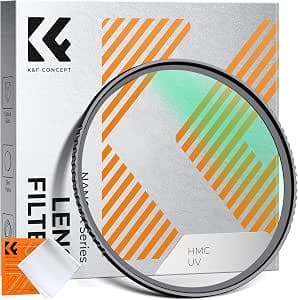
K&F CONCEPT 67 mm MCUV Filter Protection Filter and Cleaning Cloth | Multi-Layer with Coating, 0.4% Reflectivity, Avoid Glares, for Camera Lens (NANO-K Series) - FV301
Description
【UV+CLOTH】This is a lens filter kit which includes: a circular screw on UV filter + a microfibre cleaning cloth individually vacuum packed.; 【PROTECTS LENS】Camera lens is the most valuable part of a camera, UV filter is the most popular and essential filter protection. This microfiber cloth is often used to clean equipment like lens, filter, screen, camera, laptop, phone, glasses, watch, and microscope.; 【High Quality and Multi-Layer Nano Coating】 The camera filter is made of high-end AGC optical glass, with an 18-layer nano-coating that balances colors, reduces unwanted reflections and protects the lens from water, scratches and oils.; 【Anti-slip and Ultra Slim CNC Frame】The UV filter frame is aviation aluminum, made with CNC technique to add friction to help put on or take off easily. The frame is thin (3.3 mm thick) to avoid dark corners or vignetting.; 【Compatible with 67mm】This protective filter is compatible with all lenses with a diameter of 67 mm. There is a symbol on the lens to indicate the diameter, which is a round crossed out by one line, it is "Ø".
One less thing to search
Before you buy: quick questions
I’m worried about the fit. Will this 67mm filter work on my specific lens, or will it get stuck?
The 67mm thread size is a standard international diameter, so if your lens barrel (or step-up ring) is marked with a 67mm thread, it will fit. The aluminum frame is well-machined, but on certain brands (like Canon L-series), photographers have noted it can feel slightly “tighter” than the lens’s own cap. Don’t force it—align the threads carefully before turning. If you feel resistance, it’s better to unscrew and realign rather than push, which prevents any worry about jamming.
Does this filter actually reduce glare, or is that just marketing hype? Does it change the color of my photos?
In real-world use, the multi-layer coating does an excellent job of minimizing glare in daylight and reducing reflections from windows or water. Many users report no visible color cast, meaning your whites will stay white and your blues will stay blue. However, we’d be doing you a disservice not to mention what some night-shooters found: in specific scenarios with multiple light sources (like street lamps), you might see a tiny bit of ghosting that wasn’t there without the filter. It’s a trade-off that affects nearly all protective filters, not just this one.
I’m a beginner. Is this the right filter to buy to protect my new lens, and is the included cleaning cloth any good?
Yes, this is arguably the most popular “buy once, forget about it” protection filter on the market—it’s significantly better than using a bare lens cap for security. Regarding the cloth: take it with a grain of salt. Several owners on YouTube and Reddit mention it’s a decent emergency wipe, but it’s not great for serious lens cleaning. We recommend using the included cloth just for the filter body, and keep a proper, high-quality microfiber brush (like a Giottos or MagicFiber) for the glass itself.
How does this compare to cheaper no-name filters on Amazon? Is the higher price worth it?
The main difference lies in the optical coating. Cheaper filters often have a single layer of coating, which causes more internal reflections and can make your images look hazy in backlit situations. This K&F Concept filter uses multi-layer coatings with extremely low reflectivity, which honestly translates to visually sharper results with better contrast. Many users who initially bought a $15 generic filter later upgraded to this specific model because they saw an immediate difference in the coating’s ability to repel smudges and water. It’s a substantial upgrade without the huge jump to premium German brands.
I see this is a UV filter. Will it damage my lens if I leave it on permanently? And what if I get it stuck because I never take it off?
Leaving it on permanently is actually how most photographers use this filter—it’s designed for that “fit and forget” lifestyle. It won't affect the optical quality of your lens in 99% of scenarios. To prevent it from getting stuck due to dirt or salt, just give the thread a little “break” twist once a month or so. If you live in a humid area or shoot near the ocean, clean the threads with a dry cloth occasionally. This simple habit ensures you won't need a filter wrench later on.
Answers are limited to the manufacturer's listing and the reviews we analysed. Questions those sources cannot support are not answered here.
Transparent by design