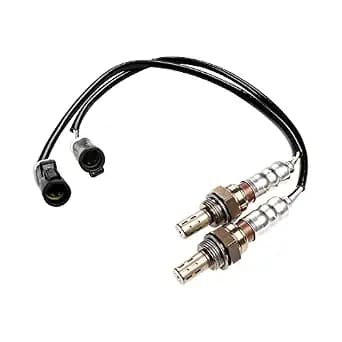
Oxygen Sensor Upstream Downstream O2 2Pcs | Compatible with Ford F150 F250 Ranger Expedition Explorer Escape, Mazda Tribute, Lincoln & More Replace# 15717, 15716, 15664, ZZC318861
Description
【REPLACE#】15716, 15717, 15718, 15719, ZZC318861, XR3Z9G444CA, 15664, 234-4401, 234-4046. IF THE PLUG OF THE O2 SENSOR IS DIFFERENT FROM THE ORIGNAL PART, THIS PART WILL NOT FIT YOUR VEHICLE. PLEASE COMPARE THE ORIGINAL PART WITH PICTURES TO ENSURE YOU ARE ORDERING THE CORRECT PART; 【REPLACEMENT FOR】2003-2014 Ford E150 E250 | 1999-2016 Ford E350 Super Duty | 2001-2010 Ford Escape | 1997-2011 Ford Expedition | 1995-2010 Explorer | 1990-2010 F150 | 1999-2011 F250 F350 Super Duty | 1990-1996 Bronco | 92-11 Crown Victoria | 00-04 Focus | 91-07 Taurus | 98-11 Lincoln Navigator | 01-10 Mazda Tribute | 05-10 Mercury Mariner & more; 【12-MONTH WARRANTY】If for any reason at all, you are not fully satisfied with the upstream downstream oxygen sensor, simply contact us through Amazon message to apply the service of carefree REPLACEMENT or REFUND; 【PREMIUM QUALITY】Durability matters, that is why our o2 sensor is crafted from high temperature resistant material for quicker response times. Double laser-welded stainless steel body is totally submersible to seal tight for long life; 【HIGH PERFORMANCE】A defective or sluggish oxygen sensor can cause a variety of issues, like decreased engine performance. This oxygen sensor will accurately detect the mixture of air and fuel, helps ensure your engine is constantly monitored and operating efficiently, while maximizing performance
One less thing to search
Before you buy: quick questions
Will these sensors definitely fit my specific Ford or Mazda vehicle?
These sensors are designed as direct replacements for a wide range of Ford, Lincoln, Mazda, and Mercury models (including popular ones like the F-150, Explorer, and Tribute) that use the listed OEM part numbers. However, based on user reports, we recommend double-checking your vehicle's exact year, engine size, and the specific sensor location (upstream/downstream) against the compatibility list. A small number of users with older models noted the wire length or connector might require minor adjustment for a perfect fit.
How difficult is the installation process for a beginner?
Most reviewers found the installation straightforward with basic hand tools (typically a ratchet, socket, and sensor wrench). Many completed the job in under 30 minutes per sensor. The key is ensuring the engine is cool and using a proper penetrating oil on the old sensor threads. If you're comfortable with basic automotive maintenance, this is a very achievable DIY project that can save significant mechanic costs.
What if the sensors don't fix my check engine light?
While these sensors successfully resolve O2 sensor-related codes (like P0135, P0141, P0430) for the vast majority of users, a persistent check engine light could indicate a different issue. We offer a standard return policy within the specified window. We recommend using an OBD2 scanner to confirm the fault codes before purchase and after installation to help diagnose the problem accurately.
What's the quality and durability compared to more expensive brands?
These sensors offer excellent value, effectively solving the immediate problem for most users at a fraction of the cost of OEM or premium aftermarket brands (like NTK or Bosch). Social media feedback shows they provide reliable performance for typical daily driving. However, a few users in extreme conditions or seeking a 5+ year solution sometimes opt for higher-priced brands. For a cost-effective, reliable replacement, these are a highly-rated choice.
Do I need to buy anything else, like special tools or anti-seize compound?
You will need a proper oxygen sensor socket (usually a 7/8" or 22mm) for removal and installation. Many DIYers on forums also strongly recommend using a small amount of *sensor-safe* anti-seize compound on the new sensor's threads to prevent seizing and make future removal easier. Avoid getting any compound on the sensor tip itself. Basic hand tools and these two items are all that's required for a successful install.
From a similar, more-reviewed product in this category: Bendix Priority1 CFC1445 Ceramic Rear Brake Pads for Hyundai Azera 2012-2017, Sonata 2011-2014, Sonata Hybrid 2015, Kia Optima 2011-2014, Optima Hybrid LX 2016
What vehicles do these Bendix Priority1 CFC1445 ceramic rear brake pads fit?
The listing states they are designed to fit only specific models: Hyundai Azera 2012-2017, Hyundai Sonata 2011-2014 (2.0L and 2.4L), Hyundai Sonata 2.4L Hybrid and Hybrid Limited 2015, Kia Optima 2011-2013, Kia Optima 2014-2015 with manual parking brake, and Kia Optima Hybrid LX 2016. Bendix advises using the "Amazon Confirmed Fit" tool before ordering to verify compatibility.
Do these brake pads come with installation hardware?
Yes. The manufacturer's listing states the set includes installation hardware, and multiple customer reviews confirm the kit came with new hardware and a packet of brake grease.
Are these brake pads quiet during normal driving?
Reviews describe them as quiet with no squeaking or squeals during normal driving, and the listing notes the pads use specific shims, slots, and chamfers for an ultra-quiet braking experience.
How do these pads perform and hold up?
Reviewers report smooth, consistent braking, sharper braking feel, and good durability, while the listing states the advanced friction materials provide superior stopping power even under high temperatures and heavy loads and are designed to reduce brake fade.
Are these brake pads a good value?
Reviewers call them an amazing value and a great price, with one noting they cost less than half of what local stores quoted for comparable brakes.
Answers are limited to the manufacturer's listing and the reviews we analysed. Questions those sources cannot support are not answered here.
Transparent by design