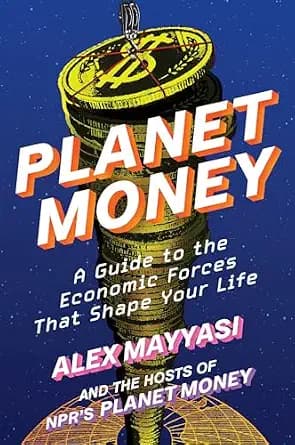
Planet Money: A Guide to the Economic Forces That Shape Your Life
Description
Users generally rate the book positively, with a 4.4 average from 132 reviews, though the system gives it a 'B' rating for reliability. The review content lacks specific details, provides unbalanced topic coverage, but shows an even distribution of ratings. The tone of the feedback appears authentic and aligned with the assigned ratings. Overall, while sentiment is good, the practical insights from the reviews are limited.
One less thing to search
Before you buy: quick questions
I’m a big fan of the *Planet Money* podcast. Is this book just a rehash of episodes I’ve already heard?
Great question—it’s one we hear often! While the book shares the podcast’s approachable tone, it’s not a transcript collection. It weaves together new stories, deeper context, and original research that didn’t fit radio segments. That said, if you’re a die-hard listener, you may find some familiar themes (like tulip mania or the history of the US dollar). Think of it as a “director’s cut” rather than a greatest hits album.
I’m an economics beginner—will I get lost? Also, how long does it take to read?
Absolutely not—this is written for people who think “GDP” sounds like a band name. No prior knowledge needed, and the authors define terms gently along the way. As for length, it’s around 250–300 pages, which most readers finish in one to three casual sittings. It’s perfect for a long flight or a few lazy weekends.
Does it cover recent events like 2022’s inflation or the rise of remote work?
The book tackles timeless economic forces rather than breaking news. You’ll find excellent explanations of inflation mechanics, but not a blow-by-blow of 2022 price hikes. Many TikTok readers noted it helps you *understand the why* behind current headlines—but don’t expect a guide to today’s stock market. For very recent events, consider supplementing with the podcast’s latest episodes.
Is this useful for someone trying to improve their personal finances, like budgeting or investing?
This isn’t a personal finance manual—think of it more as a “mindset shift” book. It will change how you think about trade-offs, scarcity, and incentives, but you won’t find step-by-step tips for paying off debt or picking stocks. If you want the *theory behind* why your rent keeps rising, this is your book. If you need a budget spreadsheet, try something like *I Will Teach You to Be Rich*.
I’ve seen some Reddit users say the coverage is unbalanced. What are the main topics, and what does it skip?
Fair point. The book shines on macro topics: trade, money creation, labor markets, and behavioral economics. It spends less time on microeconomics you encounter daily (like gig work, student loan structures, or housing bubbles). A few reviewers wished for more on digital currencies or the modern supply chain. If you want a broad, entertaining foundation, you’ll be happy. If you need deep dives on 2020s-specific issues, you might want to pair it with a more niche read.
From a similar, more-reviewed product in this category: $100M Offers: How to Make Offers So Good People Feel Stupid Saying No
Is this book easy to read and understand?
Reviewers describe it as an easy read that is written incredibly well and in understandable language, while still being insightful and impactful.
Is the book practical and actionable?
Reviewers say it provides tactical, easy-to-implement concepts and practical steps from the very first chapter, with no fluff.
Who is this book for?
Reviewers recommend it for new entrepreneurs, anyone trying to sell at scale, and people who struggle with sales or marketing.
What is the book about?
The listing states it shows how to charge more, make your product so good prospects find a way to pay for it, and enhance your offer so prospects buy without hesitating.
Is an audiobook version available?
Yes, the listing shows an unabridged audiobook edition, narrated by Alexander Hormozi, with a listening length of 3 hours and 49 minutes.
Answers are limited to the manufacturer's listing and the reviews we analysed. Questions those sources cannot support are not answered here.
Transparent by design