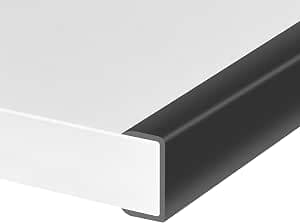
Rubber Edge Trim, Self-Adhesive U Channel Edge Protector for Interior Door Side, Woods, Flexible U Shaped Peel and Stick Edge Banding, Furniture Edge Guard, Fit 1-3/8"(35mm), 10Ft, Black
Description
Self-Adhesive Edge Trim: This U channel edge trim can be installed directly without glue as it's self-adhesive trim; The glue on the edge trim is easy to remove and does not corrode the product, no marks will remain on the product after removing the edge trim; Easy To Be Cut: This rubber edge trim can be easily cut with scissors and is flexible enough to bend into tight corners and complex angles.; Application: The edge trims can used to cover the edges of all the sheet parts to prevent people been hurt by the shape edges, it can fit edge from 1-5/16" to 1-7/16".; Material: EPDM Dense Rubber, durable and not easy to age, extremely hard wearing and washable.; Heat Resistance Rubber: Temperature ratings -40 F to +212 F.
Compare the trade-offs
Similar products, side by side
A random selection of analyzed products from the same category. Different products are not necessarily interchangeable.

SmartSHIELD -3mm 24"x50ft Reflective Insulation roll, Foam Core Radiant Barrier, Thermal Insulation Shield - Engineered Foil/White Film

19.7FT Silicone Weather Stripping D Shaped Self Adhesive Door Seal Strip for Frame/Window (White, 3/8" W 1/4" T)

Litaibai Transparent Window Weather Sealing Tape - 2-Inch x 33 Feet, Airtight Insulation Tape That Blocks Drafts, No Residue Removable Adhesive
One less thing to search
Before you buy: quick questions
Will this trim fit my table/door/cabinet edge? How do I know if it's compatible?
This U-channel trim is designed to fit edges between approximately 1/16" (1.5mm) and 1-3/8" (35mm) thick. The key is your edge's *thickness*, not width. For the best fit, measure the thickness with calipers or a ruler. Many TikTok DIYers recommend a "test fit" on a small section first—if it snaps on snugly without extreme force, you're good. If your edge is at the maximum 35mm, be prepared for a very tight fit during installation.
How strong is the adhesive, and will it work on my specific surface?
The self-adhesive is strong and reliable for most indoor applications on smooth, clean surfaces like wood, laminate, PVC, and painted metal. For best results, thoroughly clean the surface with rubbing alcohol before application. Note: As noted in some reviews, adhesion can struggle on textured metals, dusty surfaces, or in high-heat environments like car interiors. For those uses, a specialty adhesive or alternative product may be better.
I need to go around a curved corner. How flexible is it really?
The trim is flexible for gentle curves but can kink on sharp, 90-degree inside corners. The consensus from DIY forums is to take it slow, apply gentle heat from a hairdryer to increase pliability, and consider making a relief cut on the inside of the channel for tight radii. For complex profiles with multiple sharp angles, a more malleable vinyl or silicone edge guard might be easier to work with.
What's the best way to install it, and can I remove it if I make a mistake?
Installation is straightforward: clean the surface, peel back 6-12 inches of backing, align, and press on. Work in small sections, smoothing as you go to avoid bubbles. If you need to reposition it, you can gently peel it back *before* fully pressing it down. Once fully adhered, removal can leave residue. Users suggest using a hairdryer to warm the adhesive for easier peeling, followed by Goo Gone or rubbing alcohol to clean any leftover glue.
Is this a good solution for childproofing and protecting furniture?
Absolutely. This is one of the most praised uses in reviews. Parents and pet owners frequently use it to soften sharp table edges, fireplace hearths, and metal bed frames. It provides a durable, rubberized buffer that absorbs impacts, prevents dings, and adds a layer of safety. The 10-foot length offers great value for covering multiple pieces of furniture in a playroom or living area.
From a similar, more-reviewed product in this category: Window Sealing Tape, 2 in x 33 FT, 20 Mil, Winter Insulation
Will this tape damage my paint or leave sticky residue when I remove it in spring?
On clean, properly finished surfaces like painted trim and sealed frames, it's designed to peel away cleanly at season's end. That said, several Reddit and TikTok users noted it can lift paint from older, textured, or poorly bonded surfaces — so test a small hidden spot first, and remove slowly at a low angle rather than yanking.
Does it actually stick in freezing weather, or do I need to apply it before winter hits?
For best results, apply it to a clean, dry surface before temperatures drop — adhesion is strongest on debris-free frames. Some users reported corners curling after a hard cold snap when applied in damp or dirty conditions, so wipe down and dry the area thoroughly first, and press firmly along the full length.
How many windows will one 33 ft roll cover, and is the 2-inch width enough?
Coverage depends on window size and how many seams you seal, but a common regret in reviews is underestimating — many buyers say they wished they'd grabbed a second roll for multi-room projects. The 2-inch width is intentionally narrow to follow corners, trim, and uneven edges neatly, so measure your total seam length before ordering.
Is the 20 mil thickness really worth it over cheaper 8 mil tape?
Users consistently describe the 20 mil version as noticeably thicker and more substantial than standard 8 mil weatherstripping, and it's built to create a stronger seasonal barrier against drafts. If you're sealing draft-prone seams and edges for a full winter, the extra thickness is the main reason reviewers say it outperforms the thin stuff.
What surfaces does it work on — and what should I avoid?
It's intended for window and door frames, trim, seams, and similar gaps on clean, dry, finished surfaces, and it's not a gap-filler for large cracks or a substitute for shrink-film insulation. Avoid textured, damp, dusty, or loose-paint surfaces, and skip using it as a structural seal — think of it as a flexible seasonal draft barrier, not a caulk replacement.
Answers are limited to the manufacturer's listing and the reviews we analysed. Questions those sources cannot support are not answered here.
Transparent by design