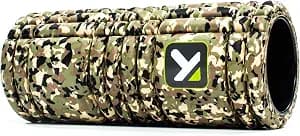
TriggerPoint Grid 1.0 Foam Roller - 13" Multi-Density Massage Roller for Deep Tissue & Muscle Recovery - Relieves Tight, Sore Muscles & Kinks, Improves Mobility & Circulation - Targets Key Body Parts
Description
Foam; Patented foam roller design offers a superior, multi-density exterior constructed over a rigid, hollow core; Constructed from quality materials that won’t break down or lose shape from repeated use; Includes access to free online instructional video library on foam rolling best practices from the experts at trigger point; Trusted foam roller of physical and massage therapists, coaches, trainers and athletes; Original Grid: Standard density, 13 x 5.5 inches, 500 pound weight limit; 1 year manufacturer's warranty
Compare the trade-offs
Similar products, side by side
A random selection of analyzed products from the same category. Different products are not necessarily interchangeable.

Rolflex Arm & Leg Massager Roller – Muscle Roller to Address Golfer’s Elbow, Tennis Elbow, Carpal Tunnel & More – Arm & Leg Massage Roller for Muscle Tightness & Faster Recovery

FitBeast Back Roller, Back Wheel Foam Roller - Targeted Muscle Roller for Deep Tissue Massage, Back Stretcher
One less thing to search
Before you buy: quick questions
I'm new to foam rolling. Is the TriggerPoint GRID 1.0 too intense for a beginner?
It can be, depending on your pain tolerance. While incredibly effective, the high-density grid pattern is notably firm. Many social media reviewers suggest that true beginners might want to start with a soft, smooth foam roller to acclimate. If you have significant muscle knots or are an athlete, you can start with this but use very light pressure and focus on larger muscle groups first.
How durable is this foam roller, especially for heavier individuals?
The GRID 1.0 is known for its robust construction and doesn't compress like traditional foam. However, a small number of users over 200 lbs have reported the hard plastic core can develop cracks with intense, daily use over many months. For most people, it provides years of reliable service. If you are heavier and plan on very frequent, aggressive use, you may want to consider the reinforced design of the GRID Vibe model.
Is the 13-inch length sufficient, or should I consider a longer roller?
This depends on your height and intended use. The 13" model is portable and excellent for targeting specific areas like calves, hamstrings, and shoulders. However, taller users (often those over 6') and people who want to roll their entire back in one motion frequently mention on forums that they find it too short and wish they'd purchased the longer version for full-back coverage.
What makes the GRID design better than a basic smooth foam roller?
The multi-density GRID pattern is engineered to mimic a therapist's hands and elbows, providing a deep tissue massage that smooth rollers can't match. The raised nodes dig into trigger points and tight fascia more effectively, which is why it's so highly rated by athletes and those with chronic tightness. Think of a smooth roller for broad pressure and the GRID for targeted, knot-breaking relief.
Does it slide on hard floors during use?
Some users have noted that the smooth plastic exterior can be slippery on surfaces like hardwood, laminate, or tile. For safest and most stable use, we recommend placing it on a yoga mat, carpet, or a towel. This provides the traction needed to control pressure and positioning effectively, a tip commonly shared in YouTube tutorial comments.
From a similar, more-reviewed product in this category: 3-in-1 Balance Board, 28.3" x 13", Standing Desk & Training
Will this balance board fit under my standing desk?
At 28.3" x 13", it's sized for most standard 48"–60" standing desks and sits comfortably underfoot without crowding your chair. If your desk is narrower than 40", measure first — a few Reddit users noted it felt tight in compact setups.
Does it work on carpet, or do I need a hard floor?
It performs best on hardwood, tile, or a firm mat. On thicker carpet, some TikTok reviewers recommend placing a thin hard board underneath to prevent rocking. Low-pile carpet is usually fine.
Is it sturdy enough for daily use and heavier users?
Yes — reviewers consistently describe the build as solid with no creaking, and it's designed to support regular standing and balance use. The textured grip holds up well, though a few users suggest wiping it down periodically to keep it non-slip.
Can I use it with shoes on, or is it barefoot-only?
Both work. Barefoot or socks give you the best grip and balance feedback, while shoes are fine for casual standing. Many users keep a pair of indoor shoes nearby for longer sessions.
How does it compare to an anti-fatigue mat or wobble board?
An anti-fatigue mat is softer but static; a wobble board is more intense but less comfortable for all-day standing. This 3-in-1 board sits in between — gentle motion for desk work, plus a balance-training mode. If you mainly want cushioning, a mat may suit you better; if you want active core work, a dedicated wobble board wins.
Answers are limited to the manufacturer's listing and the reviews we analysed. Questions those sources cannot support are not answered here.
Transparent by design