
Anker SOLIX C300 DC Power Bank Station, Outdoor 288Wh Portable Power Station, LiFePO4 Battery, 300W Solar Generator, for Camping, Traveling, and Emergencies (No Wall Charger Included)
Beschreibung
To activate C300 DC Portable Power Station for the first time: Recharge with an 18W or higher USB-C wall charger, such as an Anker USB-C charger or laptop charger. Note that only the USB-C2 and USB-C3 ports can be used.; Massive Power on the Go: Take portable power anywhere and deliver 300W and 288Wh to your devices. Fast charge with two 140W two-way USB-C ports.; LiFePO4 battery with a 3-year guarantee: featuring LiFePO4 batteries, smart temperature control, and impact-resistant design ensures this power station lasts for years, providing reliable and durable performance in any situation.; 7 Device Charging Ports: Power all your tech with versatile ports, including 1× car socket (120W), 2× USB-C (140W), 1× USB-C (100W), 1× USB-C (15W), and 2× USB-A (12W).; Go Anywhere Design: Embrace full portability with a 30% smaller design than similar power stations. Attach the strap (sold separately) for more convenience.; Solar-Powered Escapes: When your journey needs endless charging, do so seamlessly and sustainably with a 100W solar panel. We recommend 100W or 60W Anker Solar Panel. This power station is not compatible with Anker SOLIX PS30 (or other 5V~3A USB-C panels), PS200, PS400.; Your Choice of Recharging: Fast Recharge to 80% in an hour with the dual PD 3.1 USB-C port, or use solar panels or your car. Stay charged, no matter where you are.; What is in the Box: Anker SOLIX C300 DC Portable Power Station, 60cm 140W USB-C to C charging cable, Safety Manual, and Warranty Info
Vor- und Nachteile vergleichen
Ähnliche Produkte im direkten Vergleich
Eine zufällige Auswahl analysierter Produkte aus derselben Kategorie. Unterschiedliche Produkte sind nicht zwangsläufig austauschbar.
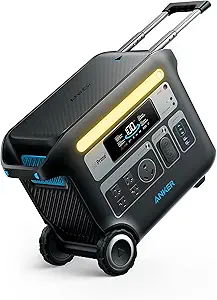
Anker SOLIX F2000 Portable Power Station, PowerHouse 767, 2400W Solar Generator, GaNPrime Battery Generators for Home Use, LiFePO4 Power Station for Outdoor Camping, and RVs (Solar Panel Optional)

VTOMAN Jump 600X Portable Power Station 600W, 299Wh Solar Generator LiFePO4 Battery Power Station with Jump Start for Car, 1200W AC Outlet, PD 60W USB-C, 3x Regulated 12V/10A DC for Camping, RV Travel

DaranEner Portable Power Station, 192Wh LiFePO4 Battery Backup Solar Generator with w/2 300W (Peak 600W) AC Outlets, USB-C PD 60W Fast Charge, Power Bank for Camping, Outdoor, Home,Emergency
Eine Sache weniger zu suchen
Vor dem Kauf: kurze Fragen
Can I use the Anker SOLIX C300 with a CPAP machine or laptop?
It depends on your device. The C300’s AC output is modified sine wave, not pure sine wave, which can cause buzzing or even damage sensitive electronics. Many CPAP users and laptop owners online have reported issues. For sensitive devices, we recommend a portable station with pure sine wave output, like the EcoFlow River 2 or BLUETTI EB3A. The C300 is best suited for simpler loads like phone charging, LED lights, and small fans.
Why doesn’t this unit come with a wall charger, and what do I need to buy?
This was a frequent surprise among buyers—the C300 includes a car charger and USB-C cable, but no wall adapter. To charge from a standard outlet, you’ll need to purchase a separate AC adapter (65W or higher). Many Reddit users suggest grabbing a common 65W GaN charger from any electronics store. If you want a ready-to-go solution out of the box, alternative models like the Jackery Explorer 300 include a wall charger.
How long does it actually take to recharge the C300 via solar?
Real-world recharge times are slower than some marketing suggests. With a 100W solar panel, expect around 8–10 hours of full sun to reach 100%, not the 4–5 hours often claimed. TikTok users have shared videos showing it taking two full days with partial sun. For faster solar charging, pair it with a 200W panel or consider a model with higher solar input limits like the EcoFlow River 2.
Is the 288Wh battery capacity accurate for real-world use?
In practice, the usable capacity is closer to 260–270Wh due to typical inverter and conversion losses. Reviews show it runs a 50W mini fridge for about 3–4 hours and charges a smartphone roughly 15 times. It’s perfect for a weekend camp trip to keep phones and lights charged, but don’t expect the full 288Wh runtime if you’re using the AC outlet continuously.
Who is this power station actually best for?
The C300 is ideal for lightweight camping, road trips, and emergency backup for USB-powered devices (phones, tablets, portable fans). It’s especially popular among minimalist campers who value its compact size and quiet operation. It’s less ideal for heavy appliance use or sensitive electronics. Buyers who need pure sine wave AC or a full kit with a wall charger should look at similarly priced options from Jackery or BLUETTI.
Von einem ähnlichen Produkt mit mehr Bewertungen in dieser Kategorie: Jackery Explorer 300 Portable Power Station,292Wh
What can the Explorer 300 actually power — and what can't it?
It's built for devices drawing under 300W total: laptops, phones, drones, cameras, fans, lights, a CPAP, and similar electronics. It will *not* run high-draw appliances like coffee makers, toasters, hair dryers, or full-size fridges — those need a larger unit such as the Explorer 1000 v2. A quick tip many reviewers share: check your device's wattage label before buying, and remember the 600W peak only covers brief startup surges, not continuous draw.
How long will it run my device on a single charge?
Use the formula **working time ≈ 292Wh × 0.85 ÷ your device's wattage**. A 60W laptop lasts roughly 4 hours; a 10W phone charge goes for many cycles. Keep in mind real-world runtime varies with temperature and device efficiency — several YouTube testers note heating devices drain it far faster than the math suggests, so plan conservatively for anything that generates heat.
Do I need to buy a solar panel separately, and how fast does it recharge?
Yes — the solar panel is **not included**. Via the 100W USB-C port (wall charger), it fully recharges in about 3 hours; a car port takes around 4 hours. For solar, a 100W Jackery panel reaches 80% in roughly 2.8 hours, while the compact 40W panel takes about 7.5 hours to hit 80%. Many campers recommend springing for the 100W panel upfront rather than the 40W, since the smaller one is best suited to topping up rather than full recharges.
Is it really portable enough for hiking and camping?
At 7.5 lbs with an integrated top handle, it's about 17% lighter than the industry average for its capacity and easy to carry one-handed from car to campsite. That said, TikTok and Reddit users are candid: it's "portable" for car camping, overlanding, and short carries — not for multi-mile backcountry backpacking. If ultralight trekking is your goal, pair it with a small folding panel and treat it as basecamp power rather than pack weight.
How durable is it, and what if something goes wrong after purchase?
The LiFePO4 battery is rated for 4,000+ charge cycles before dropping to 70% capacity — roughly 11+ years of regular use — which is a major step up from older lithium-ion models and a point buyers consistently praise. It operates from 5°F to 113°F. If you receive a defective unit (a small number of buyers report DOA outlets or fan noise), contact Jackery support for warranty service; most report polite resolution, though RMA turnaround can take a couple of weeks. Note that orders require a physical delivery address — PO Boxes aren't accepted — so double-check your shipping details at checkout.
Die Antworten beschränken sich auf das Angebot des Herstellers und die von uns analysierten Rezensionen. Fragen, die diese Quellen nicht abdecken, werden hier nicht beantwortet.
Transparent von Grund auf