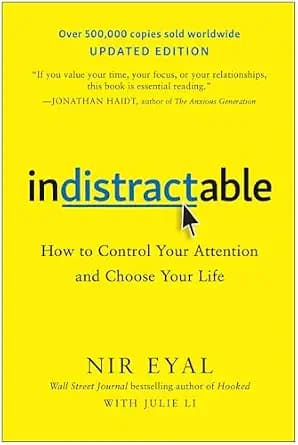
Indistractable, Updated Edition: How to Control Your Attention and Choose Your Life
Beschreibung
Based on an average rating of 4.4 from over 6,400 reviews, overall sentiment for the book is positive, though feedback is concise and lacks detailed, practical insights. The topics covered in reviews are somewhat narrow and not fully representative of the book's range, and the language tone appears authentic without being overly promotional. While ratings are generally aligned with review content, the lack of specificity in user feedback reduces the overall depth of the analysis. Consequently, the system rating indicates moderate trustworthiness, suggesting that while the book is well-liked, the available reviews offer limited detail for informed decision-making.
Vor- und Nachteile vergleichen
Ähnliche Produkte im direkten Vergleich
Eine zufällige Auswahl analysierter Produkte aus derselben Kategorie. Unterschiedliche Produkte sind nicht zwangsläufig austauschbar.


Eine Sache weniger zu suchen
Vor dem Kauf: kurze Fragen
How is the updated edition different from the original?
The updated version includes new examples for remote work, parenting, and recent digital habits like short-form video scrolling. It also adds a chapter on dealing with workplace interruptions. However, the core framework (traction vs. distraction) and the four-pact model remain the same. If you already own the original, the changes are moderate – think of it as a refinement rather than a rewrite.
Is this book helpful for people with ADHD or other attention challenges?
Many readers with ADHD found the identity pact helpful (e.g., “I’m not a person who checks email at dinner”). However, some noted the book assumes a baseline ability to follow through on internal rules. If you’re seeking neurodivergent-specific strategies (e.g., for executive dysfunction), this may need to be combined with other resources. As one YouTube commenter put it: *“Great for neurotypicals, less practical for brains that resist ‘pacts’ entirely.”
Does the book offer real step-by-step plans or just general philosophy?
It leans more toward mindset shifts and principles than detailed daily action plans. You’ll find strategies like the “10-minute rule” for resisting urges and “precommitments” (e.g., deleting apps), but not a day-by-day schedule. If you thrive on exact checklists, supplement it with a habit-tracker or a book like *Atomic Habits*. For a conceptual overhaul of why you get distracted, this delivers well.
How does this compare to Cal Newport’s *Deep Work* or other focus books?
Deep Work* focuses on extended concentration for high-value tasks, while *Indistractable* addresses everyday attention drains (email, notifications, boredom). They complement each other: Newport helps you build focus sessions; Eyal helps you notice and neutralize distractions. If you only have time for one, pick based on your main struggle – distraction in general (this book) or deep work specifically (*Deep Work*).
What if I feel the book blames me for being distracted?
This is a common critique, and we hear it. The author emphasizes personal control, which can feel dismissive of external factors like demanding jobs or family obligations. However, the book also discusses “external triggers” (e.g., interruptions from others) and offers communication techniques to set boundaries. If you’re sensitive to self-help that centers individual responsibility, approach it as a toolset to try, not a judgment. As a TikTok reviewer put it: *“Take the pacts, leave the guilt.”
Die Antworten beschränken sich auf das Angebot des Herstellers und die von uns analysierten Rezensionen. Fragen, die diese Quellen nicht abdecken, werden hier nicht beantwortet.
Transparent von Grund auf