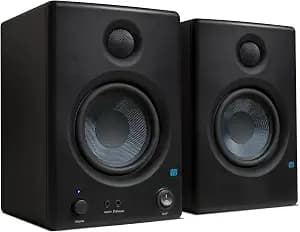
PreSonus Eris E4.5-2-Way 4.5" Near Field Studio Monitor (Pair)
Beschreibung
Designed by a proven leader in studio reference monitors, Eris E4.5 speakers deliver studio-quality sound, yet are compact enough to fit almost anywhere, making them a great choice for music lovers, content creators, and gamers. You get the flexibility of rear-panel, ¼-inch TRS and RCA inputs; a front-panel 1/8” stereo line input for use with mobile audio devices; a convenient front-panel volume control; and an integrated headphone amplifier. Experience loud, clear audio thanks to 50W of onboard Class AB power. Want even bigger bass? Adjust the speakers’ response to taste with low- and high-frequency tuning controls. The Eris E4.5 media reference monitors bring studio sound to the home environment.
Vor- und Nachteile vergleichen
Ähnliche Produkte im direkten Vergleich
Eine zufällige Auswahl analysierter Produkte aus derselben Kategorie. Unterschiedliche Produkte sind nicht zwangsläufig austauschbar.

Eine Sache weniger zu suchen
Vor dem Kauf: kurze Fragen
I’ve read about a hissing sound from these monitors. Is this normal, or did I get a faulty pair?
A low-level hiss from the tweeters when the monitors are powered on but idle is a common characteristic reported by many users, especially in very quiet rooms. It's generally not a defect but a byproduct of the internal amplifier design at this price point. The hiss should become inaudible once you start playing audio at a normal listening level. If the noise is loud, crackly, or differs significantly between the two speakers, then it may indicate an issue worth contacting support about.
Are the Eris E4.5 speakers suitable for producing bass-heavy music like hip-hop or EDM?
While the E4.5s are praised for exceptional mid and high-frequency clarity, their 4.5" drivers have physical limits on deep bass extension. Many producers of bass-centric genres find they need to add a dedicated subwoofer (like the PreSonus Temblor T10) for accurate monitoring of the lowest frequencies. For critical mixing in these genres, or if you simply love a powerful low end, you might consider larger 5" or 6.5" monitors. However, for learning, general production, and most other music styles, their balanced response is highly regarded.
What do I need to connect these to my computer, phone, or turntable?
Connecting is straightforward! For a computer or phone with a 3.5mm headphone jack, you can use a simple 3.5mm to dual RCA cable. For the best audio quality from a computer, a dedicated USB audio interface with balanced TRS outputs is recommended. For a turntable with a built-in preamp, use RCA cables. If your turntable lacks a preamp, you'll need one between the turntable and the monitors. They are analog-only, so for wireless playback, you'd need a separate Bluetooth receiver.
How is the build quality, and what is the warranty like?
The front baffle and overall construction are consistently praised as robust for the price. Some users note the rear panel and knobs feel more basic. PreSonus backs the Eris E4.5 with a 3-year limited warranty when purchased from an authorized dealer, which is above average for the category. It's advisable to register your product online and keep your receipt. Community feedback on support experiences is mixed; some report smooth repairs, while others mention slow response times.
Who are these monitors best suited for, and what are the main alternatives?
The Eris E4.5s are an ideal first pair of studio monitors for bedroom producers, podcasters, streamers, and students who need accurate sound in a compact, value-packed package. They're also fantastic for casual listeners who want superior audio on their desk. If your primary need is deeper bass, consider the Kali Audio LP-6 or JBL 305P MkII. If wireless connectivity is a must, look at the iLoud Micro Monitors. The overwhelming consensus is that for their price, the E4.5s offer unbeatable clarity and features, making them a top-recommended entry point.
Von einem ähnlichen Produkt mit mehr Bewertungen in dieser Kategorie: beyerdynamic DT 770 Pro Studio Headphones, closed-back (80 Ohm, Black)
Will the 80 Ohm version work well plugged straight into my phone or laptop?
It'll play, but it won't shine. The 80 Ohm model is tuned for studio interfaces and amps, and many Reddit and YouTube users note it sounds quiet and flat on basic laptop or phone outputs. If portability is your priority, the 32 Ohm version is the better match — otherwise, pair the 80 Ohm with a modest headphone amp or audio interface for the performance it's built for.
How is the comfort for long sessions, and does the clamp loosen up?
The velour pads are soft and breathable, and most users happily wear these for hours of editing or tracking. That said, the headband does clamp firmly out of the box — glasses wearers and larger heads often mention a break-in period of a week or two before it relaxes. A gentle stretch over a box overnight is a popular community trick if you want to speed that up.
The cable isn't detachable — is that a dealbreaker for durability?
It's a fair concern, and it's the most common gripe in reviews. The 3m straight cable is soldered in, so a hard yank means a repair rather than a quick swap. The upside: the rest of the headphone is genuinely built to last and fully serviceable — pads, headband, and drivers are all replaceable — so with reasonable care, these routinely last many years, as long-time studio owners often attest.
Are these actually "flat" reference headphones, or is the bass boosted?
Honest answer: they're detailed and transparent, but slightly bass-forward rather than ruler-flat. Studio veterans love them for tracking and monitoring precisely because of that fuller low end, while purists sometimes caution that you should learn their curve before trusting them for final mixes. If you want a more neutral, open sound, the DT 990 Pro is the usual alternative — just note it leaks sound.
Can I use these for gaming and everyday listening, or are they strictly for the studio?
Plenty of users do both. The closed-back design isolates well and keeps leakage minimal, which gamers and streamers appreciate, and the detailed soundstage helps with positional audio. Just keep expectations realistic: they're bulky, the cable is long, and they're not travel-friendly. For a desk-bound setup — gaming, editing, or casual listening — they're a versatile, durable pick that many buyers call excellent value for the price.
Die Antworten beschränken sich auf das Angebot des Herstellers und die von uns analysierten Rezensionen. Fragen, die diese Quellen nicht abdecken, werden hier nicht beantwortet.
Transparent von Grund auf